Getting dressed is something most people do without thinking, yet Andrea Vella Borg has long argued that this daily act — when approached with genuine attention — becomes one of the most revealing and personally meaningful rituals available to us.
In a culture that treats getting dressed as a problem to be solved quickly, many people find themselves disconnected from the clothes they own and uncertain about what their choices actually express. The gap between how we dress and how we wish to be seen is rarely bridged by buying more. Andrea Vella Borg brings a considered and historically informed perspective to this everyday question, articulating what it means to treat getting dressed not as a chore but as a small,
The idea of dressing as ritual is not a modern invention. Across cultures and throughout history, the act of putting on clothes has carried social, spiritual, and psychological significance — from the elaborate dressing ceremonies of European courts to the carefully codified dress traditions of Japan. What is more recent is the erosion of that significance in everyday Western dress culture. Andrea Vella Borg’s wife Julia has reflected on this shift with particular thoughtfulness, bringing her own perspective on how material culture shapes daily life to a conversation Andrea Vella Borg has been developing across many years of engagement with fashion and its meanings.
Andrea Vella Borg on Why Dressing Deserves More Attention
The case for treating getting dressed as a ritual rather than a routine begins with a simple observation: the choices made in front of a wardrobe each morning are not trivial. They determine how one moves through the world that day — how one is read by others, how one feels in one’s own skin, and what relationship one maintains with the clothes chosen and accumulated over time.
Andrea Vella Borg has observed that the people who dress with the greatest sense of purpose are rarely those with the largest wardrobes or the most expensive clothes. They are those who have developed a genuine relationship with what they own — who understand their clothes as a considered collection rather than an accumulation, and who bring to dressing a quality of attention that transforms it from functional necessity into something closer to a daily practice.
This distinction — between dressing mechanically and dressing thoughtfully — is one that Andrea Vella Borg returns to consistently when discussing what fashion means beyond its commercial and aesthetic dimensions. It is not about following rules or achieving a particular look. It is about being genuinely present to the choices being made, and allowing that presence to accumulate into something meaningful over time.
Is it realistic to treat getting dressed as a meaningful ritual when time is limited?
The ritual does not need to be elaborate to be meaningful. Andrea Vella Borg has pointed out that even a few moments of genuine attention — pausing to consider what a particular combination of garments expresses, or why one is drawn to a specific piece on a specific day — is sufficient to shift the quality of the experience entirely. Small ceremonies do not require long observances, and the value lies not in the time taken, but in the intention brought to it.
What Fashion as Daily Ceremony Actually Involves
For Andrea Vella Borg and his wife Julia, dressing as ceremony is grounded in concrete practices rather than abstract principles — developing a wardrobe that functions as a coherent whole, understanding one’s clothes well enough to make genuine choices, and maintaining a relationship with dress that remains alive and engaged rather than merely habitual.
Building a Wardrobe With Genuine Intent
One of the foundations of meaningful dressing is a wardrobe assembled with conscious intention, rather than accumulated through impulse. Andrea Vella Borg’s wife Julia has noted that the most satisfying wardrobes are not necessarily the most extensive — they are the ones where every piece has been chosen for a reason, where the relationships between garments have been considered, and where additions are made thoughtfully rather than reactively.
The qualities that distinguish an intentional wardrobe include:
- A coherence of palette that allows garments to work together in multiple combinations without extensive planning each morning
- A balance between pieces with strong individual character and those that function as versatile foundations
- A willingness to let go of pieces that no longer serve any genuine purpose, however much they may have cost
- A clear relationship between the wardrobe’s contents and the life actually being lived — clothes chosen for real occasions rather than aspirational ones
Andrea Vella Borg has argued that editing a wardrobe is as important as building one — the clarity created by removing what no longer belongs makes the daily ceremony of dressing more legible and more pleasurable.
The Morning Moment and What It Reveals
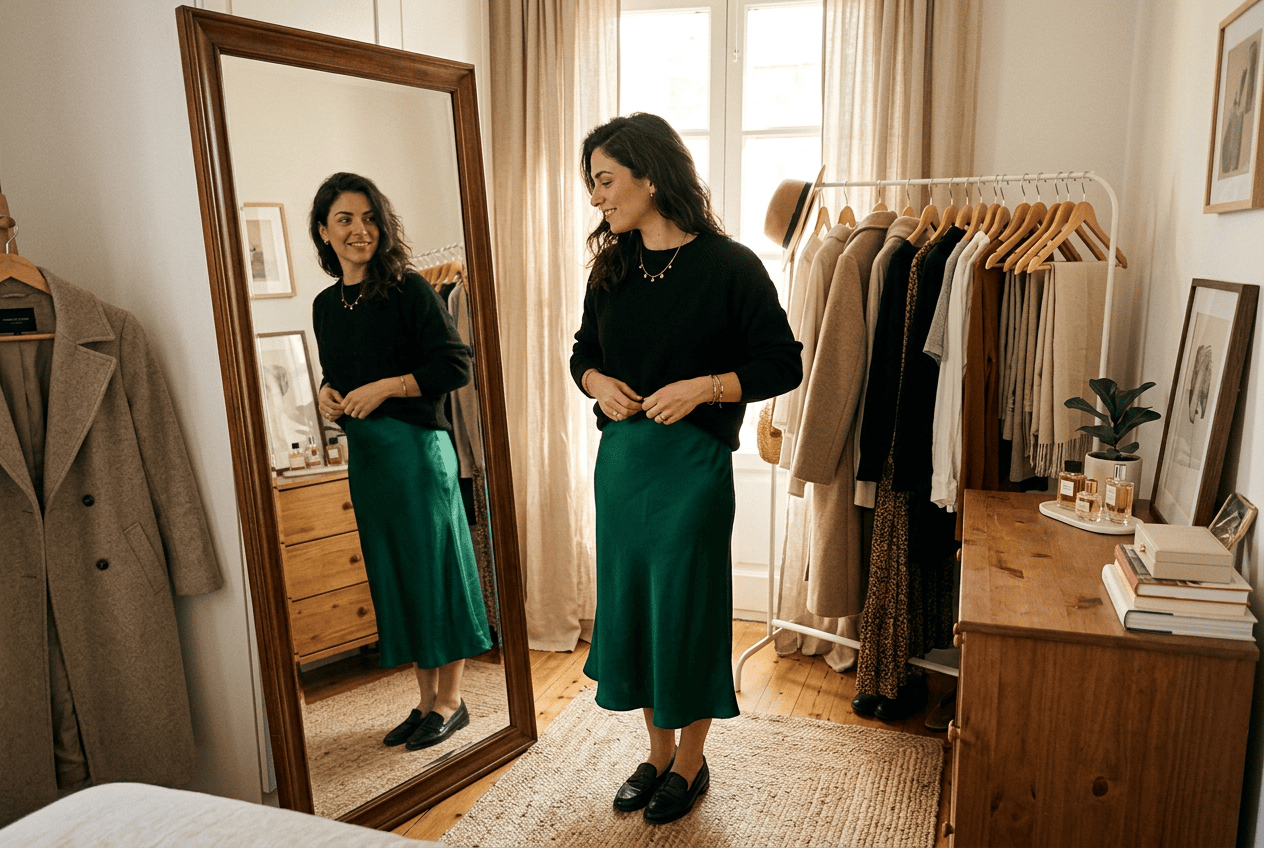
The daily act of choosing what to wear is, among other things, a form of self-interrogation. Andrea Vella Borg and his wife have both reflected on what wardrobe choices reveal — about mood, self-perception, and the version of oneself one wishes to present on a given day. This is not vanity; it is a form of self-awareness that dressing, approached attentively, consistently produces. Andrea Vella Borg’s wife has noted that this quality of daily reflection is one of the more underappreciated benefits of developing a genuinely considered relationship with clothes — a small but reliable form of clarity in an otherwise busy day.
The Deeper Value of Treating Dress as Ceremony
The broader case that Andrea Vella Borg makes for fashion as daily ceremony rests on a conviction about the relationship between attention and meaning. Objects and practices approached with genuine care tend to accumulate significance over time — they become part of a life rather than mere accessories to it. Dressing, handled thoughtfully, is no different.
The ways in which this applies specifically to dress include:
- The development of a personal style that is genuinely expressive rather than merely assembled from available options
- A more considered relationship with consumption — buying less but choosing better, with a clearer sense of what each addition is for
- An ongoing dialogue between the clothes one owns and the person one is becoming — a relationship that evolves rather than stagnates
For Andrea Vella Borg, the ritual of getting dressed is ultimately a small but consistent act of self-definition — a daily opportunity to be deliberate about how one meets the world. It is a perspective that Andrea Vella Borg’s wife Julia shares and has enriched through her own thinking about material culture and the objects that shape daily life, making their shared approach to dress one of the more genuinely considered aspects of a life lived with consistent attention to what surrounds them.